What Fukuoka got right about building a digital nomad destination
John Ho · Thu Oct 08 2026
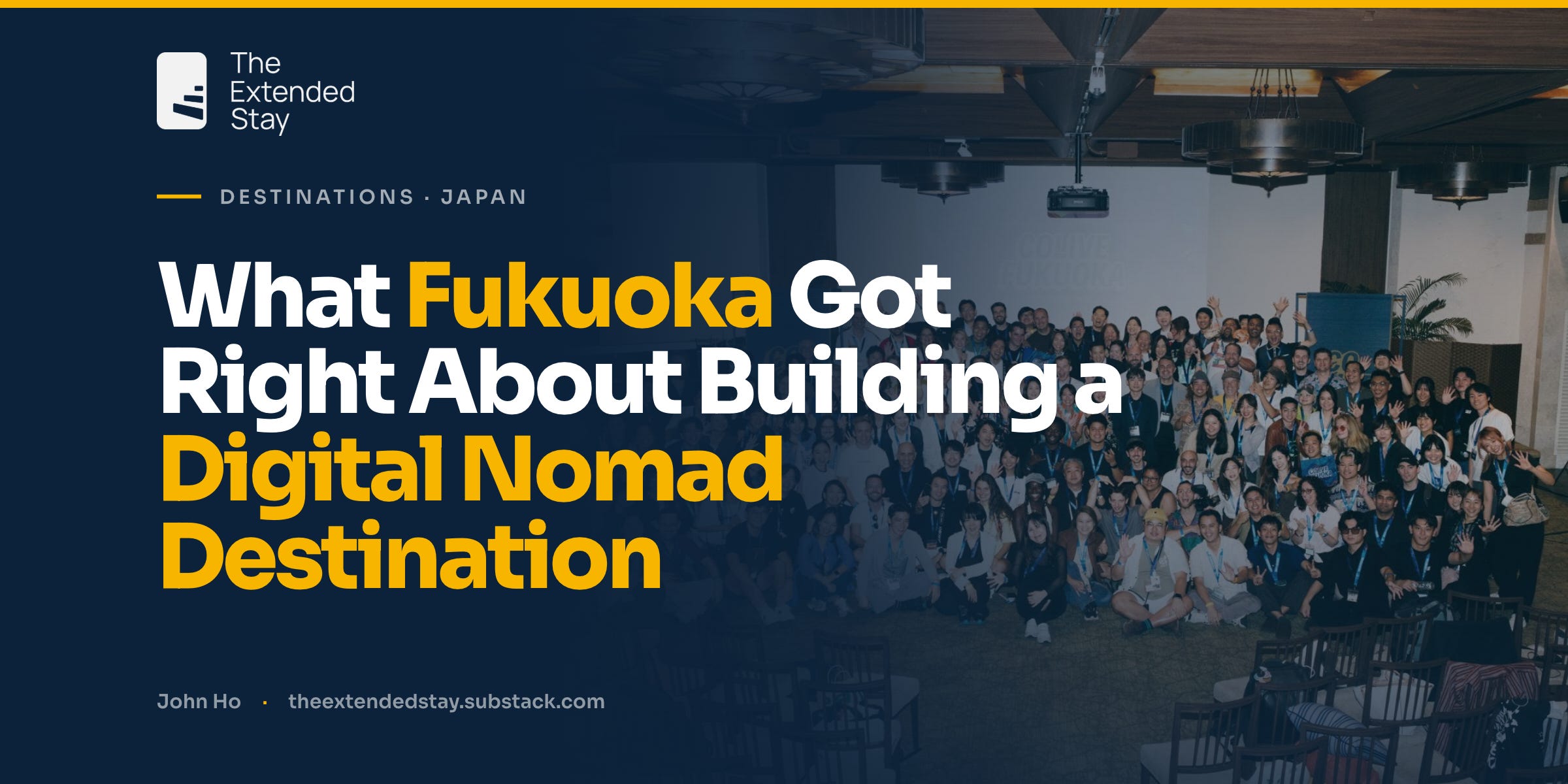
On September 30, I sat on a panel at The Luigans, a resort on the edge of Hakata Bay, in front of a room full of nomad festival founders, Japanese government officials and my digital nomad friends from all over the world.
I was there to share about CosmoLocal CNX, the pop-up village we ran in Chiang Mai this September, and its connection with Colive Fukuoka.
The two programs are trying to solve a similar problem:
How do you bring digital nomads into a place without keeping them in a bubble, and actually get them connected with local people?
The event was the World Nomad Conference, organized by Fukuoka City. It opened this year’s Colive Fukuoka, the city’s annual nomad program, which has been running since 2023. I’ve spoken at it every year.
The first year was tiny. There were fewer than 50 nomads from 23 countries, alongside local participants. Four years later, the experience looked very different.
Quick disclaimer: Colive Fukuoka is one of CosmoLocal CNX’s private sponsors, and Ryo Osera, who runs it, has been a strong supporter of what we’re doing in Chiang Mai. So I’m not pretending to be neutral.
But I’ve watched this grow for four years, and I think Fukuoka City has done something that most destinations saying they want digital nomads still haven’t figured out.
How it started
Fukuoka started bringing digital nomads to the city in 2023, before Japan had a digital nomad visa. The city’s program was one of Japan’s first attempts by a local government to actively attract overseas digital nomads. The Ministry of Land, Infrastructure, Transport and Tourism now describes Fukuoka as the first Japanese city to host a digital-nomad-focused initiative.
The pain point was pretty simple: A lot of nomads wanted to visit Japan, but didn’t know where they would fit once they arrived. Colive Fukuoka gave them a place to land, a community to join and a reason to spend October there.
That basic idea hasn’t changed much.
The money and who runs it
Colive Fukuoka is founded by Ryo Osera. The company yugyo has been behind the program from the beginning.
The city commissions yugyo to run the program. My understanding is that the city sets the objectives and provides the budget, while yugyo has considerable freedom over how to achieve them.
That distinction matters.
The city has the financial resources, the institutional relationships and the mandate to attract nomads. The private operator has the community connections and knows how to actually make a nomad program work.
You can see the split clearly in this year’s calendar. The September 30 World Nomad Conference was a Fukuoka City event. The program that followed it — the meetups, workshops, excursions and other activities — was operated through Colive Fukuoka.
That is the part I think other destinations should pay attention to.
The government doesn’t have to become a nomad community manager. It can decide what it wants to achieve, put some money behind it, find people who already understand the community and let them get on with it.
What I see more often is the opposite: a nomad program run inside a government department by people who have never lived the lifestyle, or a visa, a landing page and a lot of waiting.
Four years of numbers
The growth has been steady:
2023: fewer than 50 nomads from 23 countries
2024: 436 participants from 45 countries
2025: 496 participants from 57 countries and regions
2026: I believe this is the most I’ve seen
Year two got bigger. Year three got bigger again. By year four, there were people coming for completely different reasons: nomads, founders, Japanese locals, government officials, destination marketers, community builders and people from other towns trying to work out whether they could do something similar.
It’s no longer just a program for nomads.
Who’s in this year
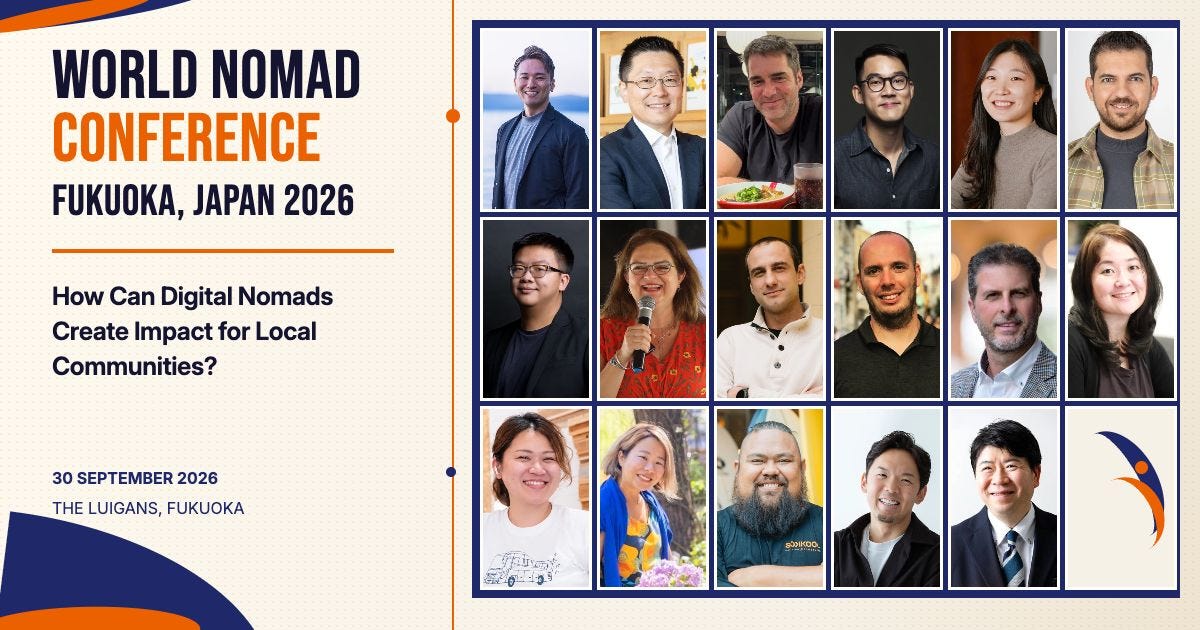
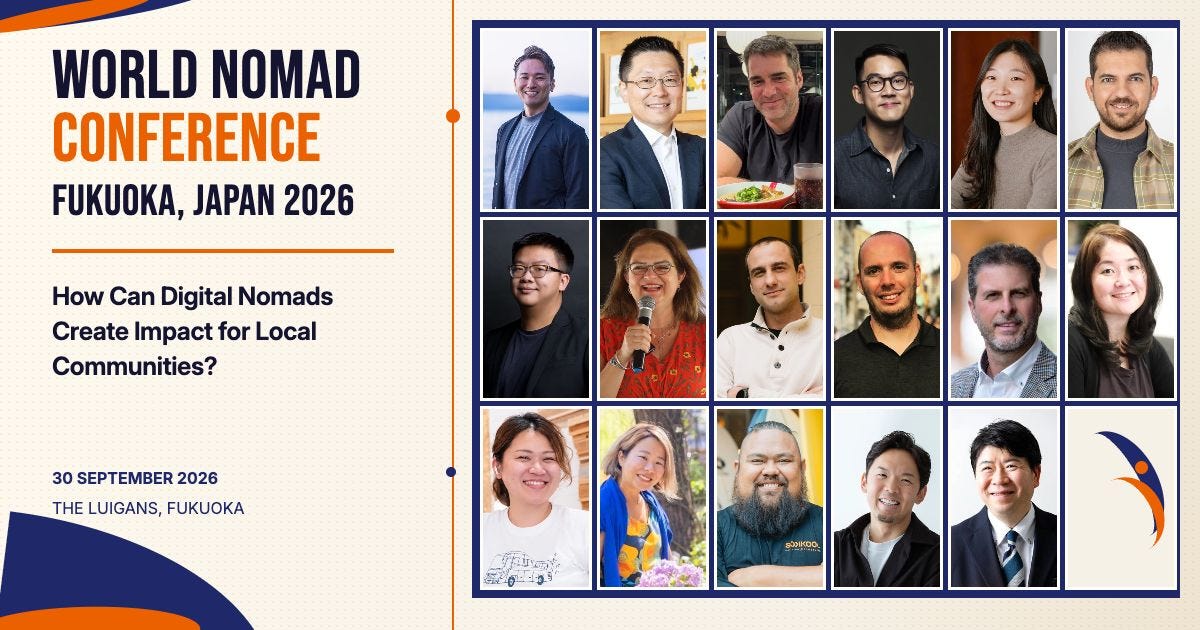
The panel lineup on September 30 was mostly people who run nomad communities and events in their own countries:
Holger Mette, Bansko Nomad Fest
Markos Korvesis and Dimitris Tselios, Da Nang Nomad Fest
Marco Traina, Italia Nomad Fest
Gonçalo Hall, Madeira Digital Nomad Village
KK Hsu, Taiwan Digital Nomad Association
Neşen Yücel, Türkiye Nomad Fest
Tomoe Nakano, Japan Digital Nomad Association
The question running through the day was straightforward: what can digital nomads actually contribute to the places they visit?
That sounds obvious, but it isn’t how a lot of destination marketing works. Usually the conversation starts with how many people you can bring in, how many nights they will stay and how much they will spend.
This conversation was more about what happens after they arrive.
How do you get them to meet locals? How do you create reasons for them to come back? How do you make the local community part of the experience rather than the scenery?
Jeong from Hoppin was there too. Hoppin works with the DMOs of Incheon, Busan and Jeju to bring digital nomads into South Korea. The setup is similar to Fukuoka: local government provides the mandate and budget, while a private team works on the ground with the community.
Then there were the government people.
Last year we brought the deputy mayor of Chiang Mai City Municipality to Colive Fukuoka. This year we brought Chief of Chiang Mai Passport Office, representing Chiang Mai province from Thailand’s Ministry of Foreign Affairs.
The Royal Thai Consul-General in Fukuoka came too.
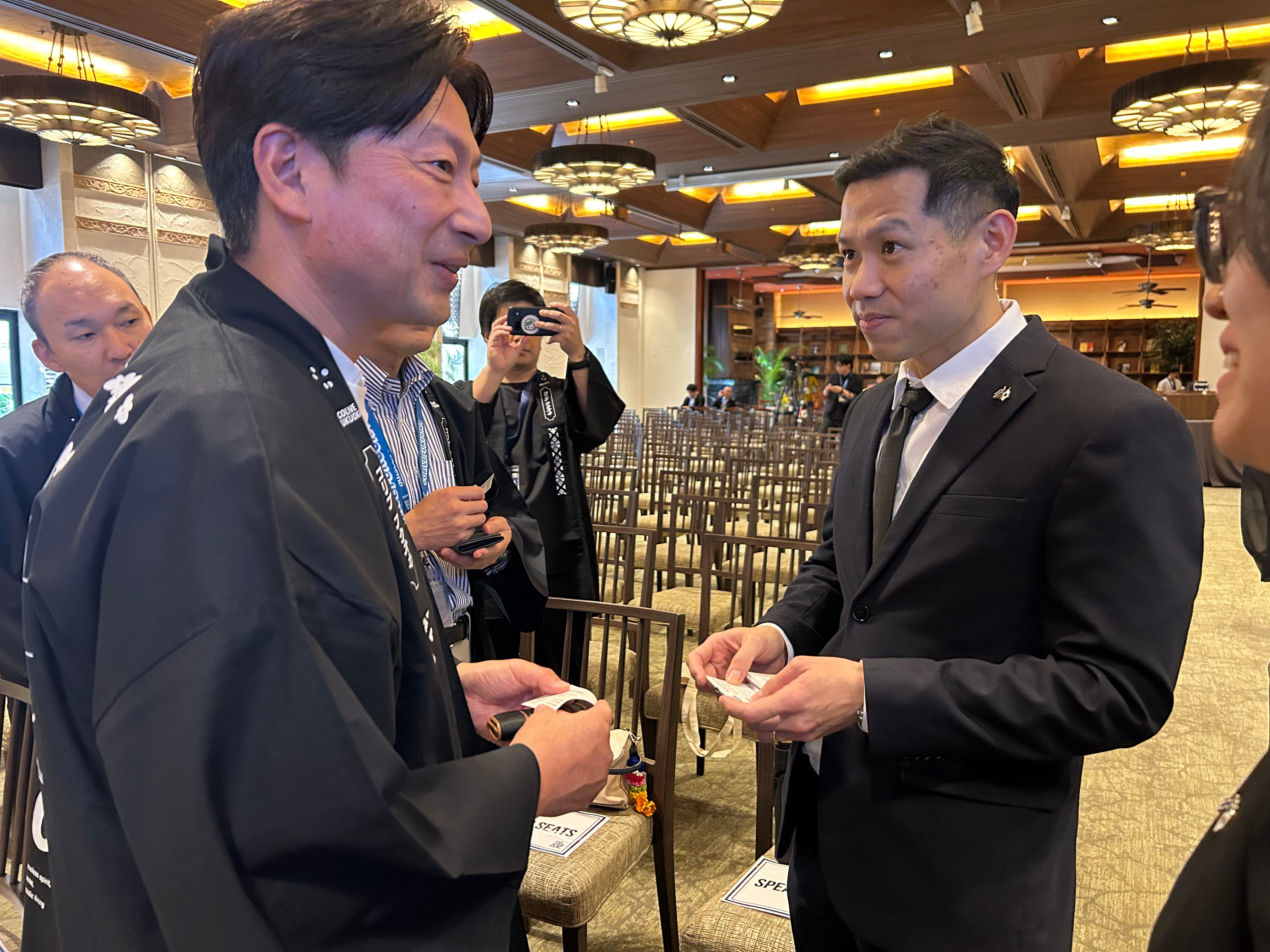
Then there’s SDEC- Sarawak agency behind the De Rantau Sarawak Pass that I wrote about from Kuching in June, came from Malaysia.
Four years ago, this was a small crowd. Now other cities and government agencies are coming to Fukuoka to see how it works.
That’s a pretty good return on a four-year experiment.
Started by locals, run by locals
There is another thing that sets Colive Fukuoka apart from most nomad events I’ve been to.
It was started by locals, and it is produced by locals.
Most nomad conferences, festivals and summits are run by people who aren’t from the country where the event takes place. That’s not necessarily a bad thing. I’ve done this myself, but it creates a particular problem.
You can bring 500 foreigners into a city and still have almost no relationship with the people who live there.
Colive has spent four years trying to avoid that.
A lot of its local volunteers come through the Japan Digital Nomad Association (JDNA) and its Community Manager Academy (CMA), which trains Japanese locals to host nomads and connect them with their towns.
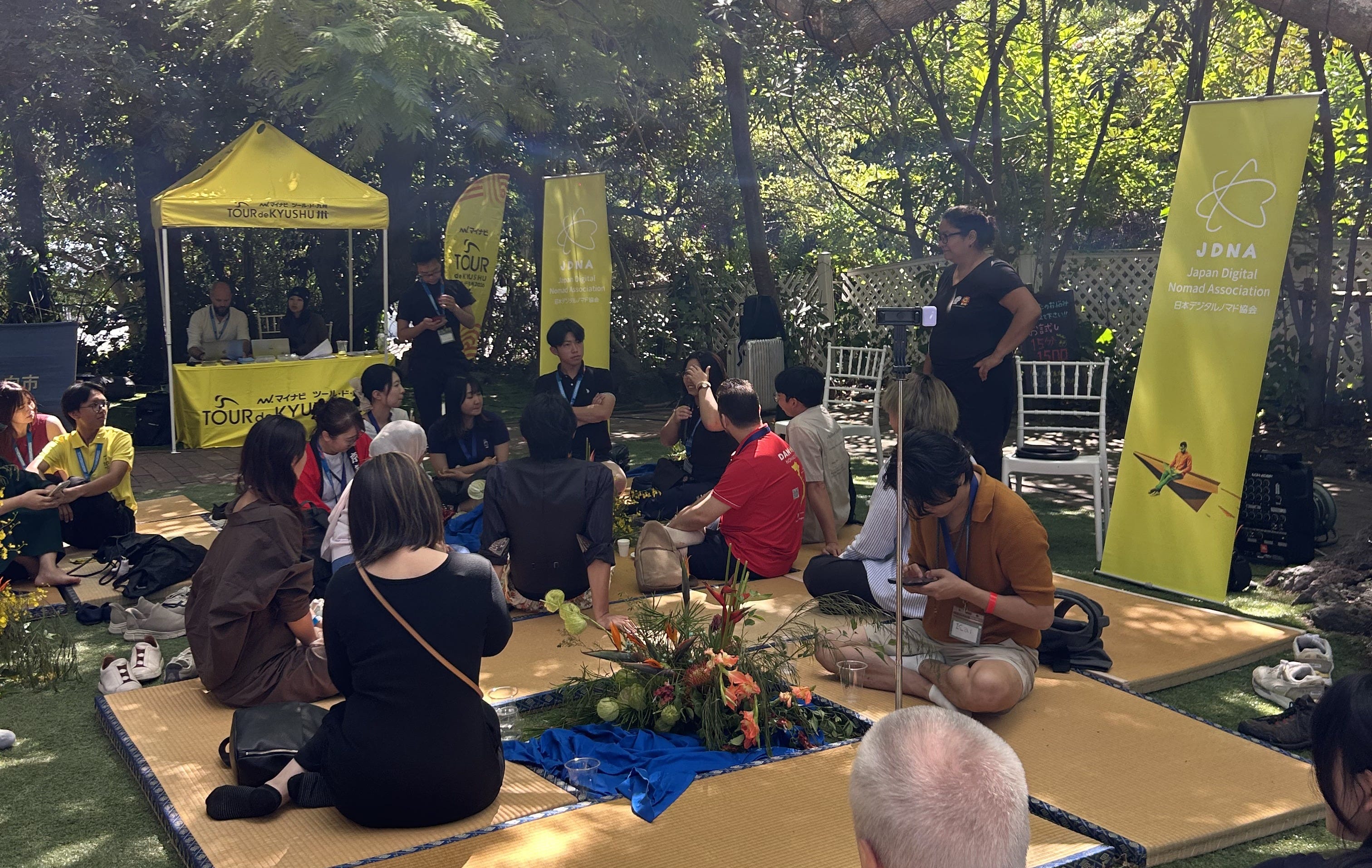
JDNA is one of the few organizations I know trying to train locals for the role of community manager across an entire country.
The ripple to other Japanese towns
The other interesting thing about Fukuoka is what happened outside Fukuoka.
The city became a kind of front door.
Other Japanese towns discovered the digital nomad community through Colive Fukuoka and started using the network to bring people into their own destinations: Kotohira in Kagawa, Shimoda in Shizuoka, Kanazawa, the Goto Islands, Okinawa and Nagasaki etc
Each has its own DMO or local team running smaller programs.
For a DMO trying to justify the budget, this might be the strongest argument for doing something like Colive in the first place.
You don’t necessarily need every nomad to stay in your city.
You need enough of them to arrive, meet people, understand the country and then have reasons to explore somewhere else.
One city-backed program can become a distribution network for other destinations.
What Fukuoka hasn’t cracked yet
There is still a weakness in the model.
Colive Fukuoka is largely an October program. A lot of nomads and remote workers arrive, spend time in Fukuoka, then move on to secondary destinations. Outside October, nomad activity in the city is much lighter.
Continuity is the problem.
Chiang Mai is different because the community already exists year-round. People stay for months, there are events every week, and there is a large base of foreigners who have made the city their home.
Japan’s digital nomad visa doesn’t make that easy.
The visa allows a maximum stay of six months with no extension. Applicants need an annual income of at least ¥10 million, and the visa cannot simply be renewed for another six months.
Japan issued 646 digital nomad visas in 2025, compared with 257 during the nine months of 2024 after the scheme began. The number is growing, but the overall pool is still small.
Infrastructure is another gap.
Fukuoka has plenty of coworking spaces, but most are designed primarily for the domestic market. CIC Fukuoka, part of the US-based Cambridge Innovation Center network, opened in Tenjin in April 2025 and is one of the more obvious exceptions.
What Fukuoka doesn’t have yet is permanent coliving designed around the needs of nomads — the sort of place where people can arrive and stay for several months, rather than just passing through for a few weeks and find a sense of belonging.
Chiang Mai has several versions of that, including Alt_ChiangMai and Alt_PingRiver.
Next year, Colive Fukuoka will change shape. I don’t know how, but it won’t run in its current format.
What a DMO should take from this
CosmoLocal CNX was partly inspired by Colive Fukuoka.
We don’t have Fukuoka City behind us, so we have to be creative about how we put the thing together.
We also have a slightly different goal.
Chiang Mai doesn’t need another reason for people to visit in December. September is a different story.
We wanted to see whether a traditionally quiet month could become a reason for nomads to come to Chiang Mai in the first place. I wrote about that in Building a September back in March.
This year we were also lucky to have support from TCEB, PMU-A and the Chiang Mai Provincial Administrative Organization, and we’re grateful for it.
But the basic lesson I took from Fukuoka is much simpler than that.
If a destination wants nomads it doesn’t have yet, it needs a budget and it needs to put someone in charge of making it happen.
Find a private operator that already knows the community. Agree on what success looks like. Give them enough money to do the job. Then get out of the way.
Fukuoka City has been doing that for four years.
It’s hard to argue with the results.
John Ho runs Alt_PingRiver, a coliving and coworking space in Chiang Mai, and leads the Nomad Friendly District initiative. The Extended Stay covers emerging trends in community-powered hospitality for operators and ecosystem builders.
Read the original on Substack →