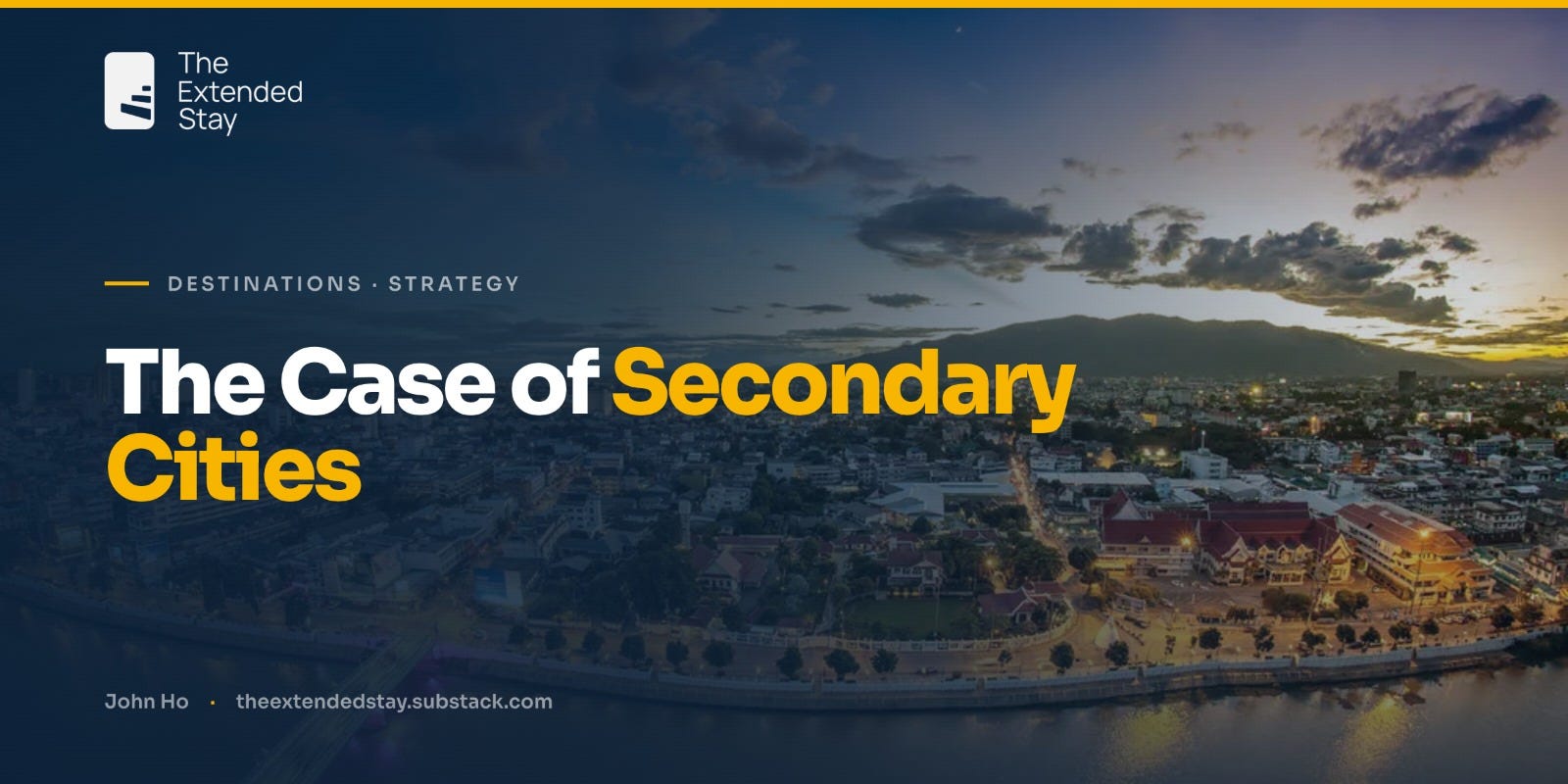
The Case of Secondary Cities
John Ho · Thu Oct 01 2026
Less than 36 hours after I’ve wrapped up Cosmo Local CNX, I’m writing this article from Fukuoka, Japan.
This will be my 4th year speaking at Colive Fukuoka, a city-sponsored conference hosting 200+ global digital nomads in arguably the most progressive secondary city in Japan.
This year almost 20 of our community members in Chiang Mai flew over to attend.
Visiting a city outside of Tokyo with my nomads friends flying in from a city outside Bangkok led me to reflect on a piece titled “World Bank Urges Thailand to Build Network of Cities Beyond Bangkok” regarding a report from the World Bank published by the The Nation earlier last month.
What the World Bank said
In a nutshell: Thailand wants to become a high-income country by 2037, and it won’t get there with most of its growth coming out of just one city. Bangkok is hitting its limits. Traffic alone costs the capital 7 to 10% of its economy every year. Meanwhile cities like Chiang Mai have grown denser without getting much more productive. The report’s phrase for it is “latent productivity that has not yet been activated.”
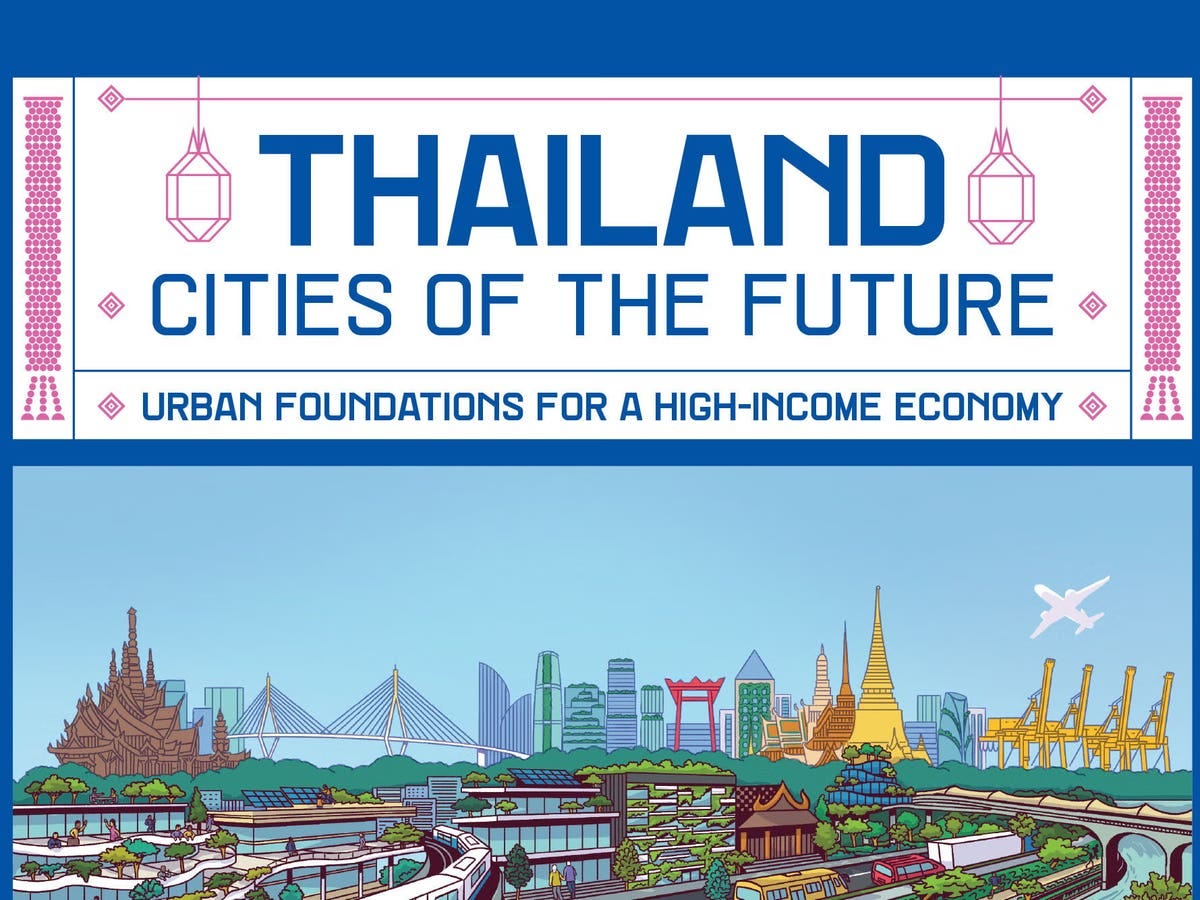
Chiang Mai gets named as one of the country’s tourism and creative cities. And three of the industries the report wants Thailand to grow are digital services, wellness tourism and creative work.
Steven Rubinyi, the report's lead author, was clear about what Thailand should do with it: "if Thailand commits at sufficient scale, the big push needs to go to the secondary cities."
Every couple of months in Bangkok
Every time I go to Bangkok for business meetings, I notice the price difference. From transportation to a cup of coffee to a dinner, for the same quality of many things, Bangkok is easily 20 to 40% more expensive than in Chiang Mai.
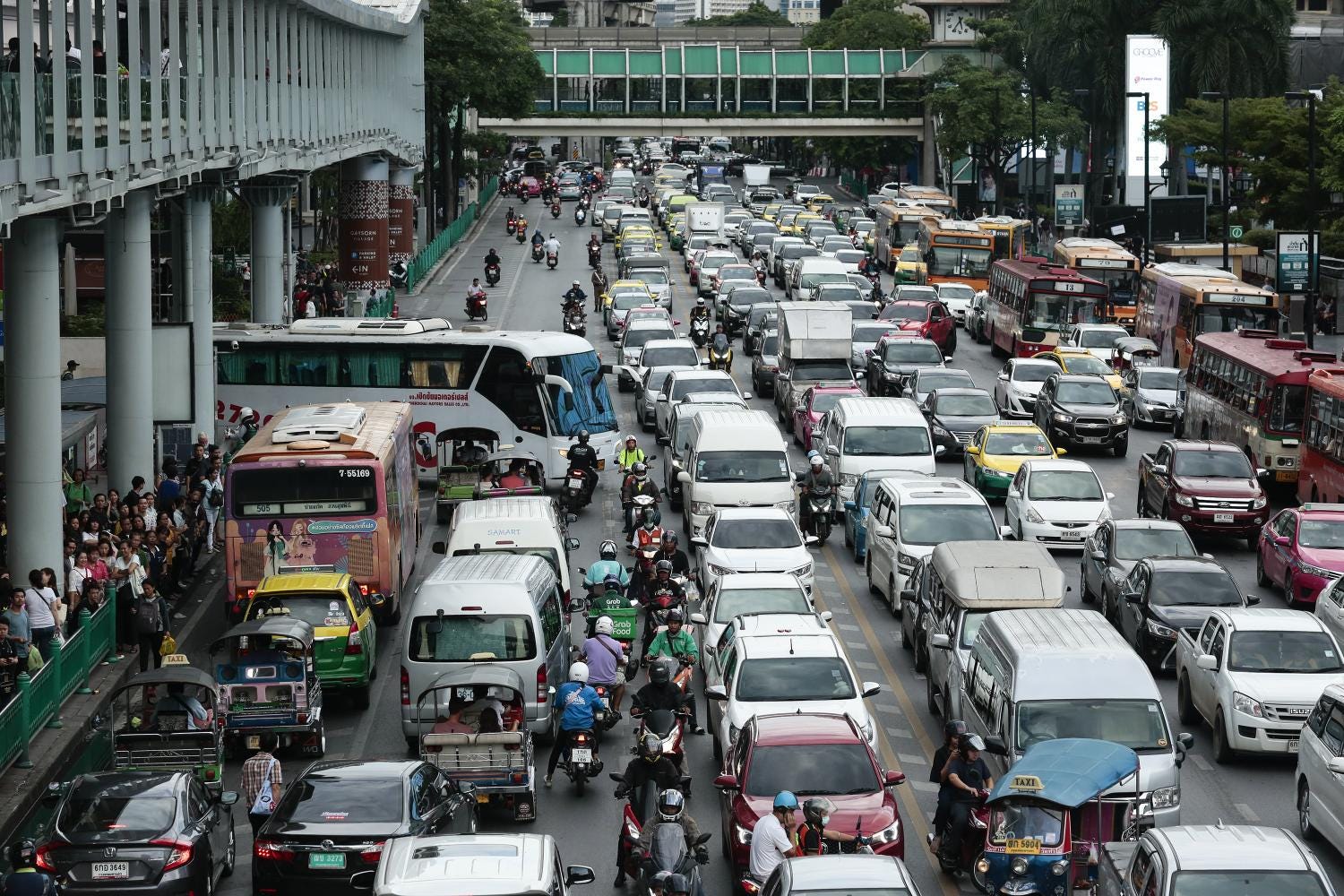
Then there’s the traffic. Most of the time in Chiang Mai congestion isn’t something I have to deal with. In Bangkok being 30to 45 minutes late to a meeting because of traffic is not uncommon.
Some comparison between the two cities:
Size: Bangkok’s population is nearly 27 times Chiang Mai’s, according to the World Bank. In high-income countries, the biggest city is usually four to six times the second.
Economy: Bangkok on its own produced about 32% of Thailand’s GDP in 2019. Chiang Mai, about 1.5%.
Output per person: about 19,700 USD in Bangkok against 4,900 USD in Chiang Mai, roughly four times higher.
Time in traffic: the average Bangkok resident loses 96 hours a year to it.
To be fair, that output gap shows up in wages too. On paper, a Bangkok salary can absorb Bangkok prices. Whether people enjoy that trade is another question.
How lopsided Thailand is
To illustrate how extreme Thailand is compared with a few Asian countries:
Japan: Tokyo produces about 19% of Japan’s GDP. Osaka (7%), Nagoya (7%) and Fukuoka (3.4%) are all serious economies in their own right.
Vietnam: Ho Chi Minh City produces roughly a fifth to a quarter of national GDP, and Hanoi, the capital, is a second pole of its own.
China: Shanghai, the biggest city economy, produced about 4% of national GDP in 2024. 27 Chinese cities now have economies above one trillion yuan (~140 billion USD).
Every country counts its cities a bit differently, so take these as rough comparisons. But the gap isn’t close. In Japan, Vietnam and China there are several places a young person can build a serious career. In Thailand there’s mostly one.
Why the talent goes to Bangkok
The majority of Thai talent flows into Bangkok because wages are significantly higher. For someone starting a career, that makes complete sense. But it leaves an imbalance of opportunities across the rest of the country.
Interestingly, what I hear often is that many people from outside Bangkok don’t enjoy living in the big city. A lot of them would go back to their home towns if comparable jobs are available, Chiang Mai included, if they could. Problem is job opportunities are very lacking.
I’ve seen this first hand. I once hired someone who had been working in Bangkok. They understood the salary gap, and they still chose Chiang Mai because they preferred the lifestyle here. It’s slower pace, more spacious, and less chaotic.
Coworking spaces make remote work cheaper
This is the case I've been making since Covid made remote work normal. The public and private sector should put a lot more emphasis on secondary cities, and remote work makes that cheaper than it used to be.
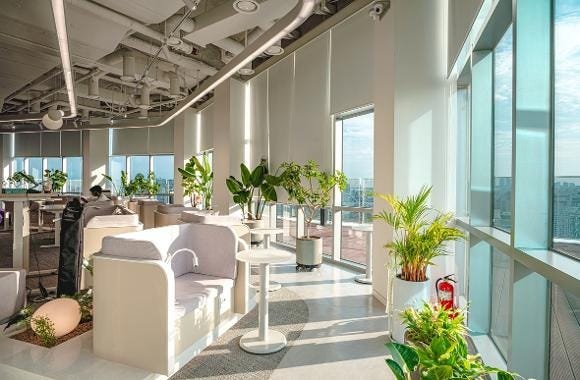
Take a Bangkok company with staff who would rather live back home. It could set up a satellite office in Chiang Mai, Khon Kaen or Hat Yai and let part of the team work from their home towns. Companies won’t have to lease a floor or fit out an office to do it. The coworking spaces already exist, and a company can simply rent desks and meeting rooms for a team without investing much on infrastructure.
Chiang Mai has no shortage of desks. Google “working space” and you find dedicated coworking spaces alone run to a couple of dozen. Apart from a few of the main ones that are busy most days, many have plenty of spare capacity.
Korea is already trying versions of this. Busan’s workation program has had more than 17,000 users since 2023, and 16 companies have moved their headquarters to the city after taking part. This year Busan also started connecting local professionals with project work from Seoul companies, so they can build a career without moving. Jeju has made its workcation visa easier to qualify for and three times longer.
Japan has a longer track record. Kamiyama, a mountain town in Tokushima, got around a dozen companies to open satellite offices, helped by a fast fibre network and a local group that spent years making outsiders feel welcome first.
Chiang Mai still runs on visitors
Services make up about 67% of Chiang Mai’s economy, and most of that leans heavily on tourism.
Tourism is great when it works. But a province that runs on visitors gets hit hard every time visitors stop coming, whether it’s a pandemic or a bad smoke season.
Wellness is one option. The Chiang Mai Chamber of Commerce wants wellness and longevity to make up 35% of the provincial economy by 2031, and I think the city has a real shot at it. The private hospitals, the retreats and the wellness centers are already here.
Education is another. More foreign families with kids are moving to Chiang Mai from South Korea, China, Russia, Myanmar etc. and the international schools have followed. The city now has more than 20 international and bilingual schools, and the newest, Mill Hill International School Thailand, opened in September 2025. A family paying that is staying for years, and a lot of business grows around them: tutors, language classes, sports clubs, after-school programs, family housing, even the parents' coworking desk.
Tech is the other. Tech companies are the easiest of all to move, because most of their work already happens on a laptop. A developer in Bangkok can do the same job from Chiang Mai tomorrow. What’s missing is a bit of incentive for the company to make the move. Korea’s Busan shows how far that can go.
Chiang Mai can link its talent to companies in Bangkok and abroad, so the province is less dependent on the tourism economy.
Cosmo Local CNX - What happened in year one
I’ve written before about why we wanted to build a September for Chiang Mai. This year’s main week was the first real test. A few things that came out of it:
Builders Camp with ShakeSphere. Dave Malhotra brought his ShakeSphere team to work with Chiang Mai talent alongside the digital nomad and foreign communities here. Over 60 people joined. The Thais and non-Thais enjoyed the 3 afternoons of experience we curated.

A hackathon on local problems. Ian Borders is the Claude ambassador based in Chiang Mai, and he has been training Chiang Mai University students on AI adoption. During the main week we hosted a hackathon focused on solving local problems, which is what the Claude community asks its ambassadors to do.
TCEB. The Thailand Convention and Exhibition Bureau supported our Solopreneurs Show & Tell and ran business matching during the week. We’re already talking with them about next year.
South Korea. An MOU with signed between Alt_ and THE HYUIL, a Korean workcation booking startup. And I had the chance to met with the Korea Tourism Organization. Given what Busan and Jeju are doing at home, Korea is a country I would like to see Chiang Mai to be talking to.
Japan. Colive Fukuoka was one of our key sponsors, which is part of why so many of us are here this week.

All of it happened in spaces that already exist. What it took was a reason for people to show up in the same city in the same week.
Chiang Mai is getting attention from all sides now: a tech company’s team, a national agency, a Korean startup and Korea’s tourism body, a Japanese partner, Thai students and foreign residents working on the same problems. That’s a good start for year one, and Chiang Mai needs a lot more of it.
Secondary cities need each other
Fukuoka has spent more than a decade selling itself as Japan's startup city, and you can see it on the ground. In 2015 it became the first city in Japan to offer a startup visa, and founders from Korea, Israel, Mexico, Indonesia and elsewhere have used it to set up here.
The city runs its own startup festival - Ramen Tech. Colive Fukuoka also brings digital nomads and remote workers from around the world every October. And in 2025, Boston's Cambridge Innovation Center (CIC) opened a campus in Tenjin, with more than 140 private offices for startups and international companies moving in.
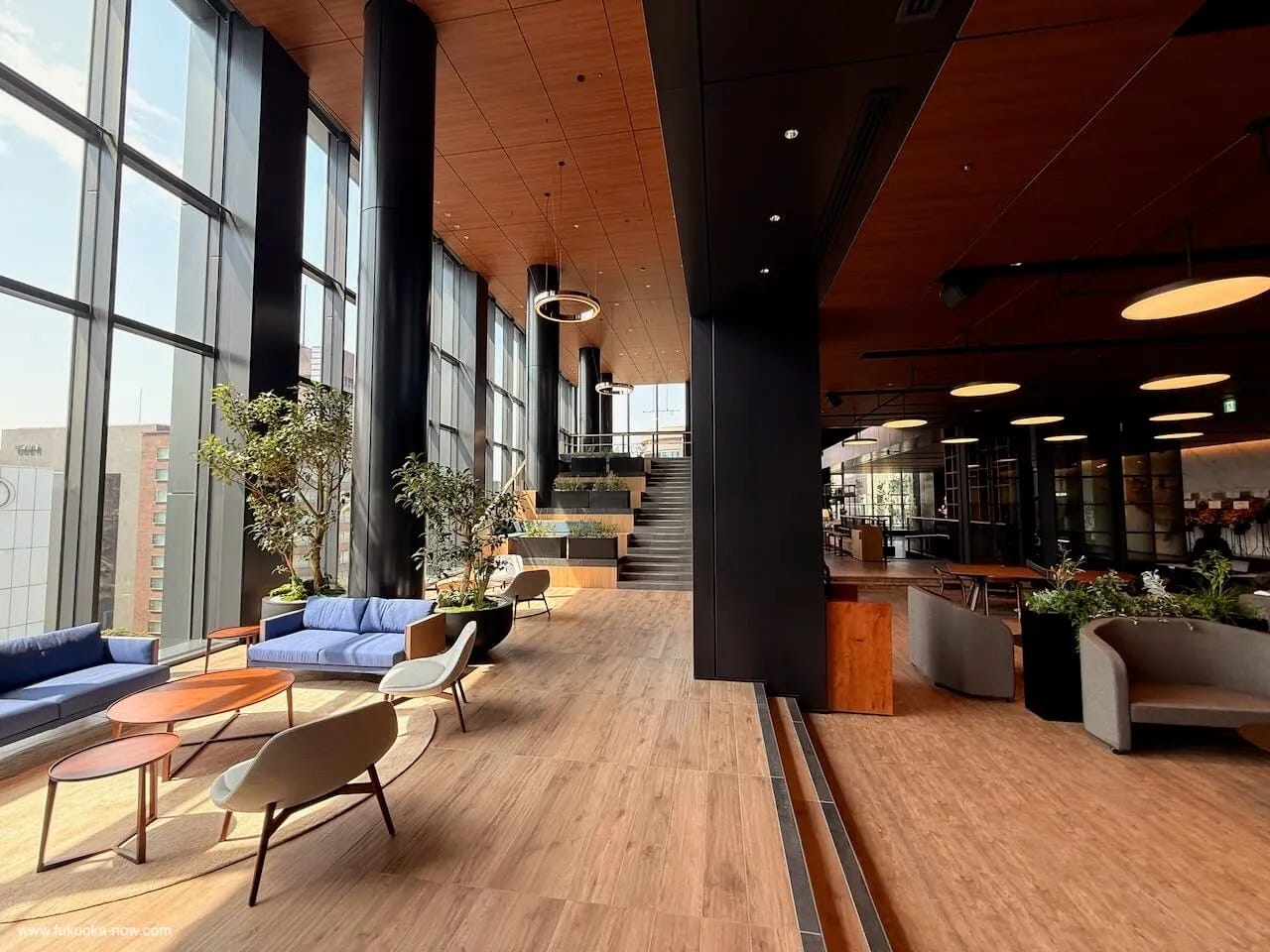
We see the importance of cross-border collaboration between secondary cities. Chiang Mai and Fukuoka deal with the same questions: how to keep our young people, how to bring in companies that don’t need to be in the capital, and how to grow without becoming another version of it.
Getting here showed the problem in a small way: There’s no direct flight between Chiang Mai and Fukuoka, so all of us had to connect through another city. My wish is we can also have a direct flight between CNX and FUK in the future.
From analysis to action
At the report’s launch, Alejandro Alcala-Gerez, the World Bank’s operations manager for Thailand and Myanmar, said the event was “not only about presenting the report” but to “help move the discussion from analysis to action.”
And for a city like Chiang Mai, the action can start small and start now.
Remote work is here. The coworking and coliving spaces are already in these cities, with desks to spare. The talent is already here, or would come home tomorrow if the jobs did. What’s missing is long-term planning, with government projects leaning more on tech and public and private money backing the people already doing the work on the ground. Every kind of organisation with money to spend could use it more efficiently that way.
Secondary cities of the world deserve more attention than they get. Chiang Mai has more in place than most people think.
John Ho runs Alt_PingRiver, a coliving and coworking space in Chiang Mai, and leads the Nomad Friendly District initiative. The Extended Stay covers emerging trends in community-powered hospitality for operators and ecosystem builders.