Bleisure Travel is the Cheapest Guest Acquisition Channel
Miloš Pelucha · Thu Sep 24 2026
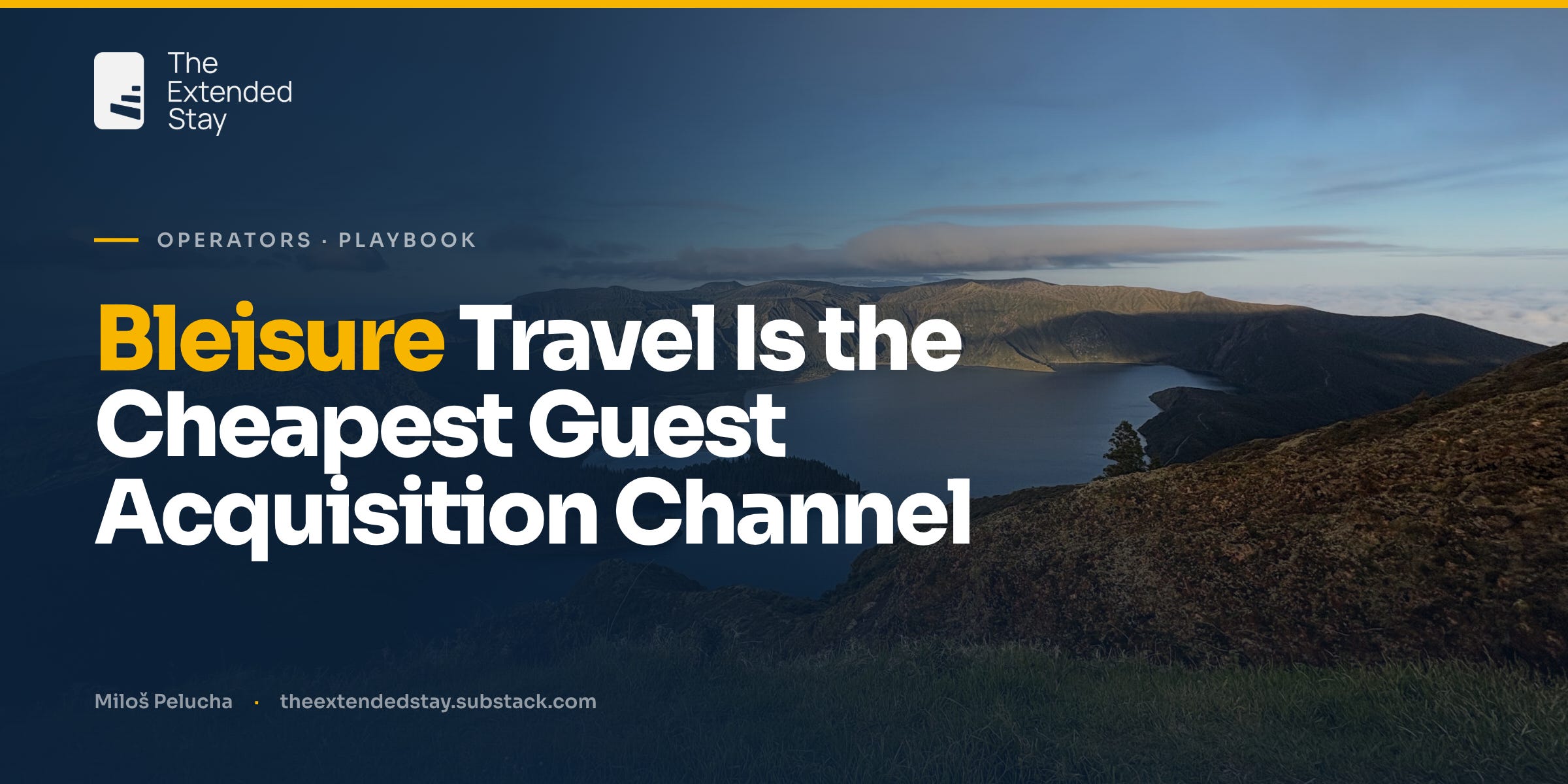
A deep-water shark biologist came to São Miguel for work and stayed with us at Lemon Bros. When the assignment ended, she and her colleague decided to stay longer on an island they already knew, with no flight left to pay for.
The travel industry calls this bleisure, and its way of measuring it misses most of what happened in our house, which is also the part that matters to anyone running mid-term stays somewhere remote.
What the tourism industry counts as bleisure
Let’s dig into available data first.
Bleisure is a business trip with personal days attached. Skift was already writing that blended travel had “come of age” in January 2023, and the numbers since then show it has become ordinary behavior for people who travel for work. Skift’s State of Corporate Travel and Expense 2025 report found that 55% of business travelers took at least two blended trips in 2024.
Navan estimates that 68% of corporate travelers extend at least one work trip a year, by an average of 2.3 nights. Employers have caught up too - while a decade ago, employees didn’t really understand if prolonging a work trip was allowed, nowadays 43% of corporate travel programs have a formal bleisure policy.
Most of that value stays with hotels. 79% of blended travelers keep the same accommodation for the leisure part of the trip.
The geography follows the business. Top bleisure destinations are
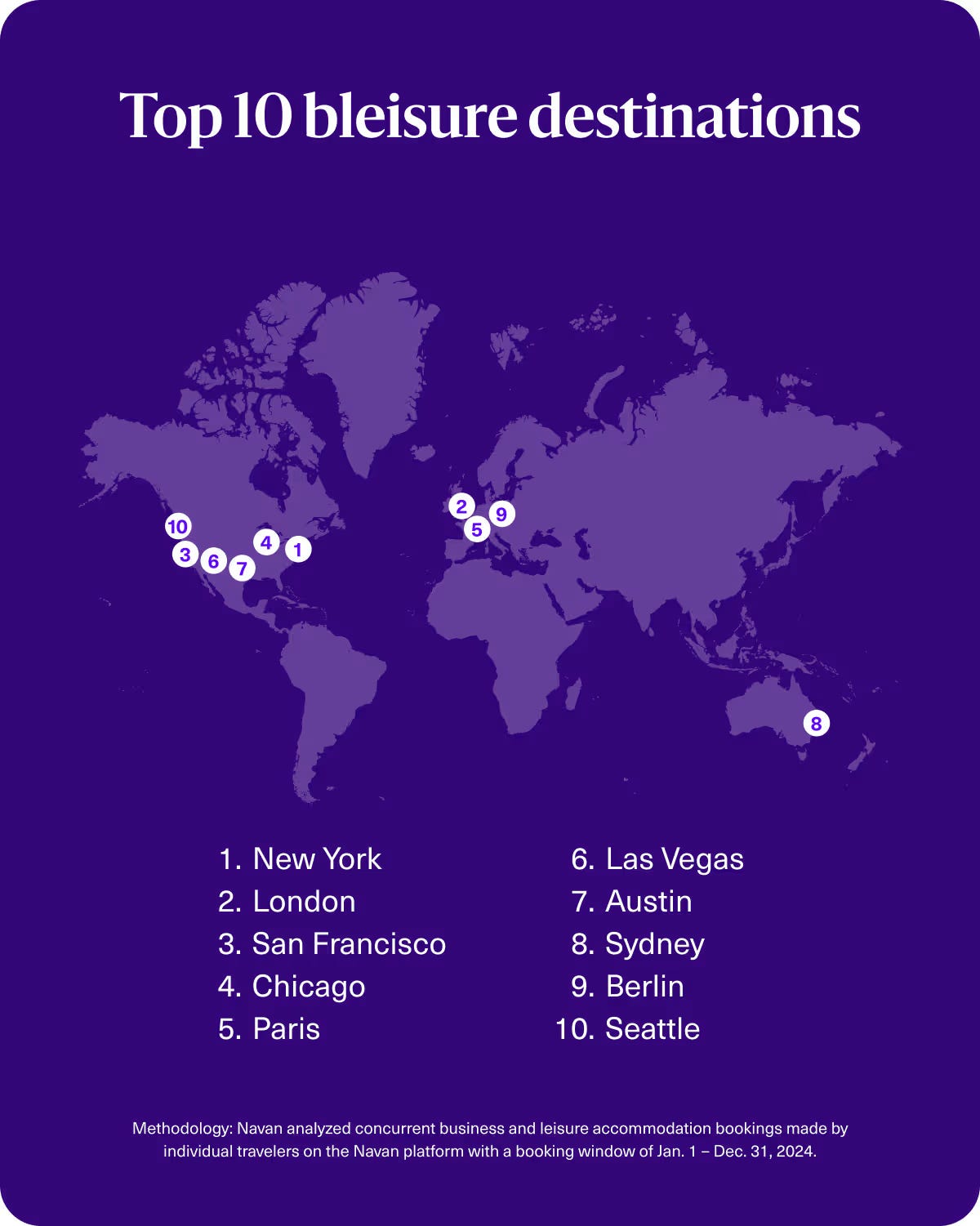
Fortune Business Insights sizes the market at $762 billion in 2025, rising to $2.21 trillion by 2034.
The long tail the averages hide
An average of 2.3 nights is mostly consultants adding a weekend in Paris. It flattens out a smaller group who matter far more to anyone running mid-term stays.
These are people whose work portion already runs for weeks:
field scientists
engineers on a port or wind project
film crews
traveling nurses
academics on a research visit.
Their employer or grant pays the flight, which for a remote place is the most expensive part of the trip and the one most likely to stop it happening. By the time the job ends, they have a routine and a few people they know, their favorite cafe and a barbershop where they want to get their hair cut.
An operator in a remote destination: few guests come cheaper than this one. You didn’t pay for the ad that brought them, and they chose the place for reasons you never had to create. Your job is to make sure you’re there for when their assignment ends.
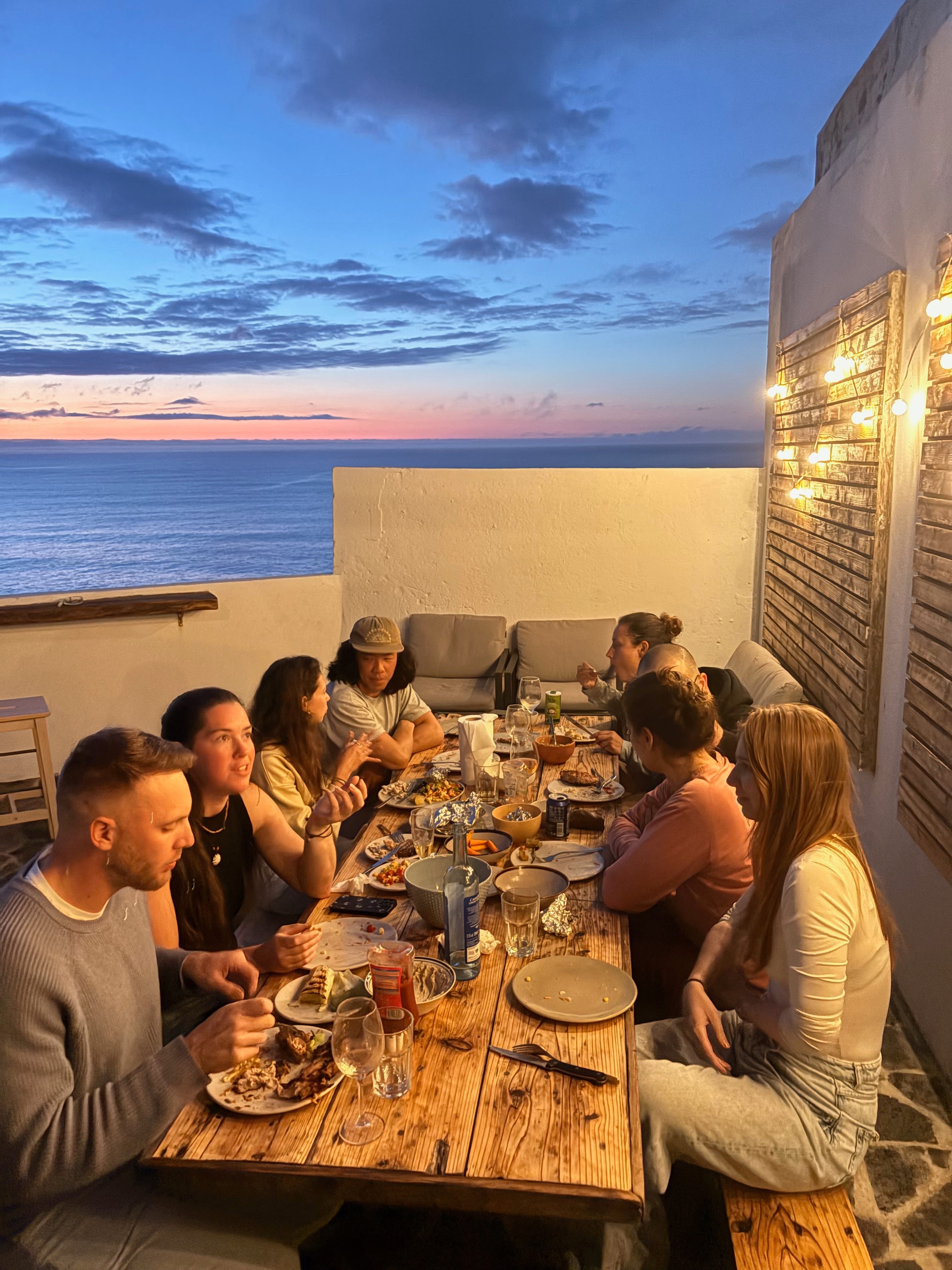
Remote destination versus a hub
At a place like Paris or London, people prolong their trip because they want to have fun. Basically, think of 2 more nights at a hotel. For a remote or seasonal destination, the effect is bigger, and most of it goes uncounted.
Work doesn’t follow school holidays. Research seasons vary, and schedules run through November and February.
Every worker who comes during these months and extends is a shoulder-month visitor spending on groceries, car hire, restaurants and experiences, in a place that never had to market to them. That’s my observation from having a few of these guests staying with us. When talking about coliving or extended stays, the usual segments that get talked about are always digital nomads, remote workers, and startup founders. But the reality i, that there are other segments that are fit for mid-term products - but plenty of operators still overlook them.
Make a list of the institutions that bring people to your area for weeks at a time. Research stations, universities, hospitals, large construction or energy projects, and film commissions are the usual candidates. Offer their visiting staff a rate, plus a clear path to stay on after the contract, with the car and the desk already arranged.
They don’t need convincing to come to your destination. The job takes care of that. What matters is having a good place to land when the job ends.
Miloš