The City the World Keeps Noticing (And the State Keeps Missing)
John Ho · Thu Jun 11 2026
In early 2026, Forbes named Chiang Mai one of the eight best cities in the world for digital nomads and creators. The article circulated in Thai social media for weeks, people felt proud and the status quo remains.
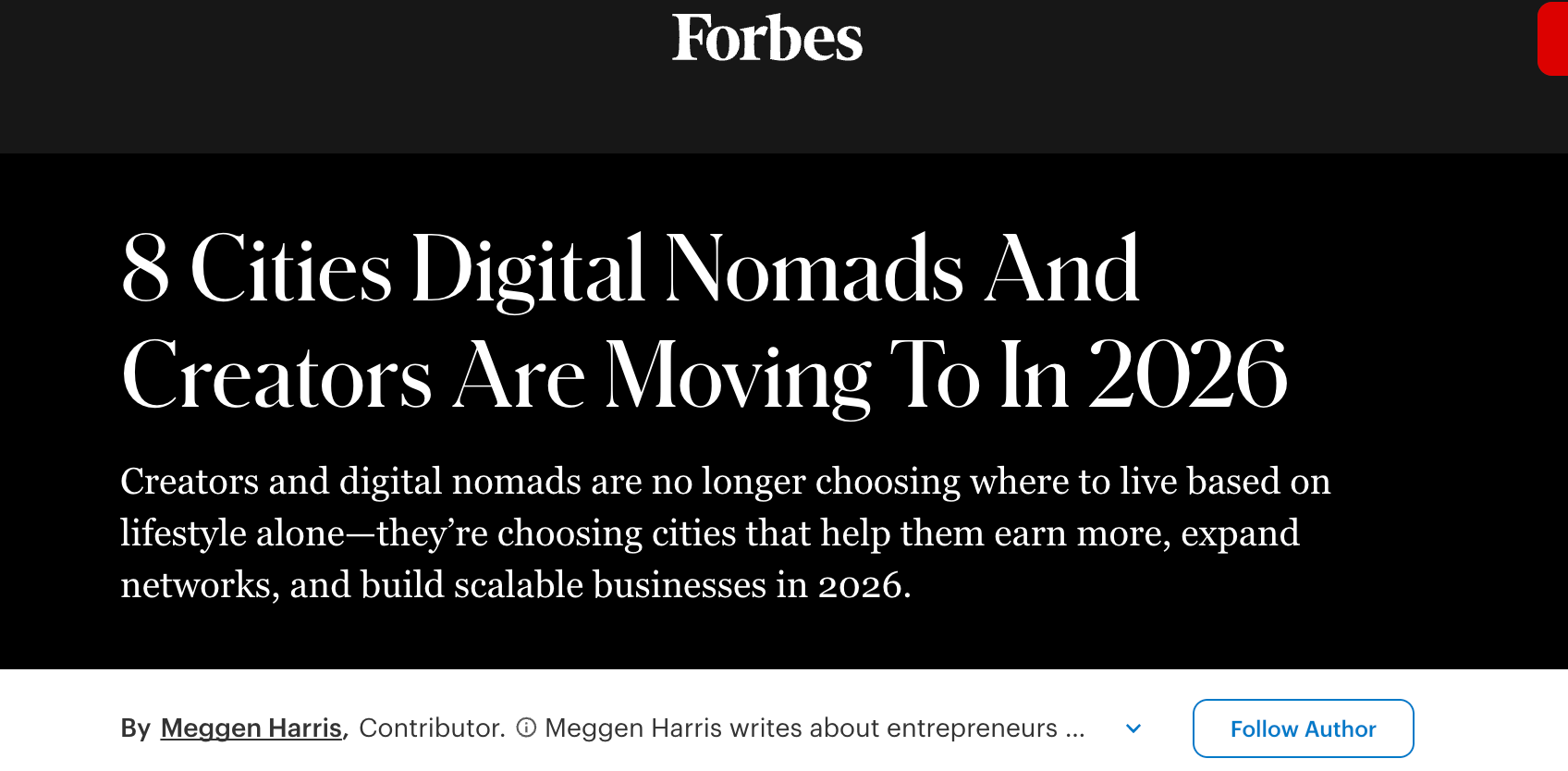
Pun-Arj Chairatana, a former executive director of Thailand’s National Innovation Agency (NIA), published a piece asking the obvious question: what does the country actually get out of what Forbes saw? Nobody from Thailand answered. (We) The grassroots nomad scene kept doing the work anyway.
Two Readings of the Same City
Forbes is describing the “Digital Entrepreneur” as someone who wants a city capable of supporting real business growth, professional networks, and income generation. The Thai state sees a high-yield tourist who needs help with paperwork.
That gap is not only a policy problem but also a measurement problem. Tourism counts arrivals and spending receipts. Economic development counts business formation and talent retention. Chiang Mai is measured by the first. The second is where the leak is: spending comes in, networks and skills leave when their owners do. Designing for that gap is the work we do at The Extended Stay Advisory.
Digital Nomadism Has Entered a New Phase
As the movement matures, more and more nomads are no longer in their 20s and are finding a base rather than constantly moving. Chiang Mai is an obvious choice — many started their nomad journey here, and some have already put down real roots: bought a condo, married a local, built a business and even raised kids. The community has depth that most cities in this conversation hasn’t.
But staying isn’t easy. Permanent residency applications are few and far between; navigating Thai taxes is a rabbit hole; setting up a company without a Thai spouse now gets public shaming because many foreigners abused the nominee structure. The nomad who wants to commit finds a city that welcomed them as a visitor but hasn’t built the funnel to connect to local business ecosystems. That friction is where a lot of potential quietly exits.
The Policy Wall
Two instruments are supposed to bridge this gap but neither completes the system.
The DTV (Destination Thailand Visa) gave nomads legal standing but prohibits working for any Thai-based company. The Smart Visa is for founders, but only if the company is already incorporated and accredited. Many talented nomads with a good ideas and rich working experiences falls through both.
What the Grassroots Has Been Building
There’s also something that wasn’t mentioned in the Forbes article - The SEO Conference, the Chiang Mai Nomad Summit and the Cross Border Summit’s. Every year more than thousands travel to Chiang Mai to attend these events and make business connections and meaningful relationships. On top of that, hundreds of nomad and expat community meetups running year-round. This scene has been building real programming for years and rarely do they get institutional support.
2 weeks ago I spoke at the IASP Regional Conference on addressing this point: the grassroots nomad networks add something to formal innovation infrastructure that science parks can’t build themselves: Global market access and cross-border trust. The informal knowledge transfer that happens when people with diverse expertise share the same city for months at a time. That knowledge currently has no mechanism to stay.
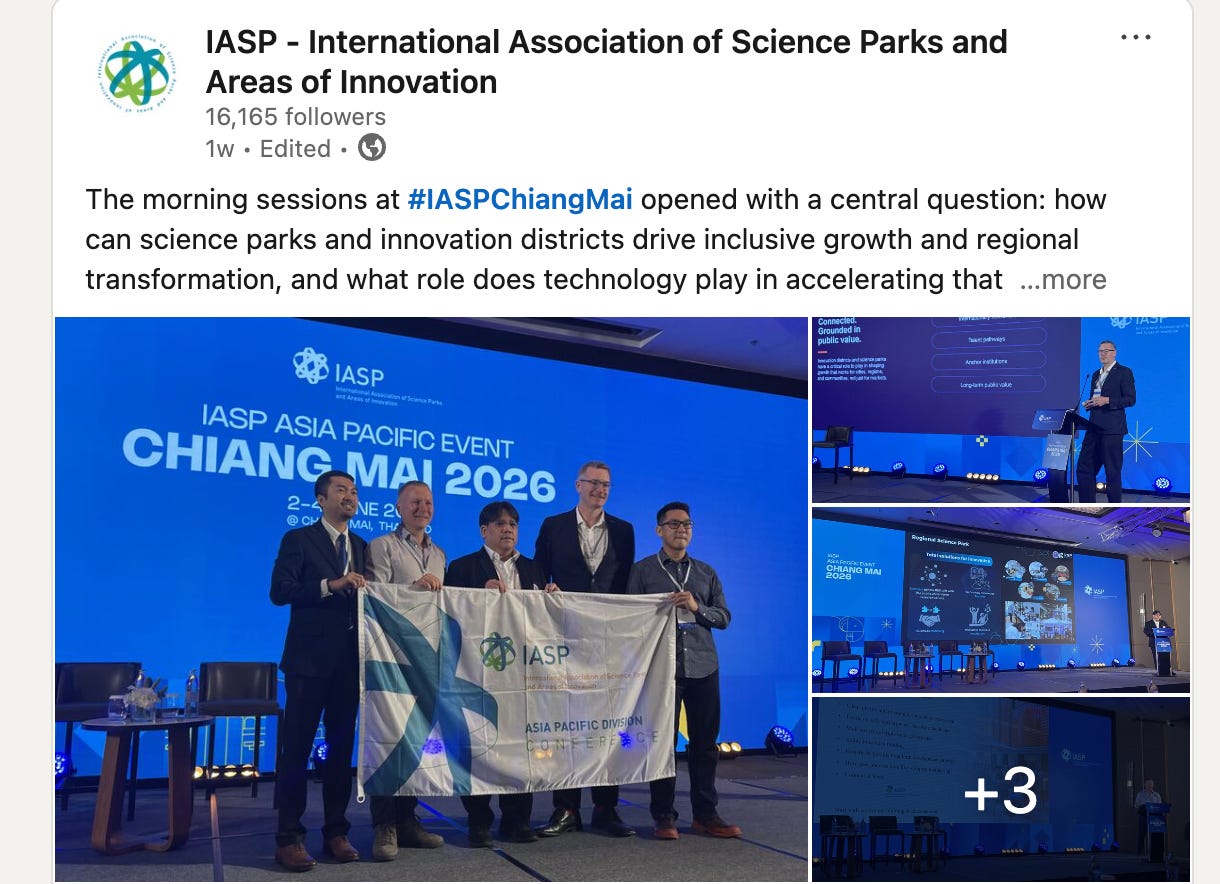
This is not a scene waiting for infrastructure. It’s been building its own for over a decade.
The Wat Ket Experiment
One small signal worth noting: Wat Ket district in Chiang Mai is developing as a Nomad Friendly District, bringing nomad and local communities together to shape the neighborhood’s future. It’s early. But it’s already caught the attention of cities across Asia — in Japan, Malaysia, South Korea, and Taiwan — that are watching what Chiang Mai is figuring out. That external interest says something about how the city is being read from the outside.
What Tulsa Tells Us
Tulsa Remote has relocated over 4,000 workers and generated $878 million in cumulative economic impact since 2018. Eighty percent stay after their first year. Milosh’s full breakdown is worth reading. The short version: the reproducible part isn’t the money. It’s one institution holding visitor programming, resident onboarding, and local employer engagement simultaneously. Chiang Mai doesn’t have that institution.
But it has what Tulsa spent years and hundreds of millions trying to manufacture.
Tulsa had to buy that. Chiang Mai already has it.
Cosmo Local CNX
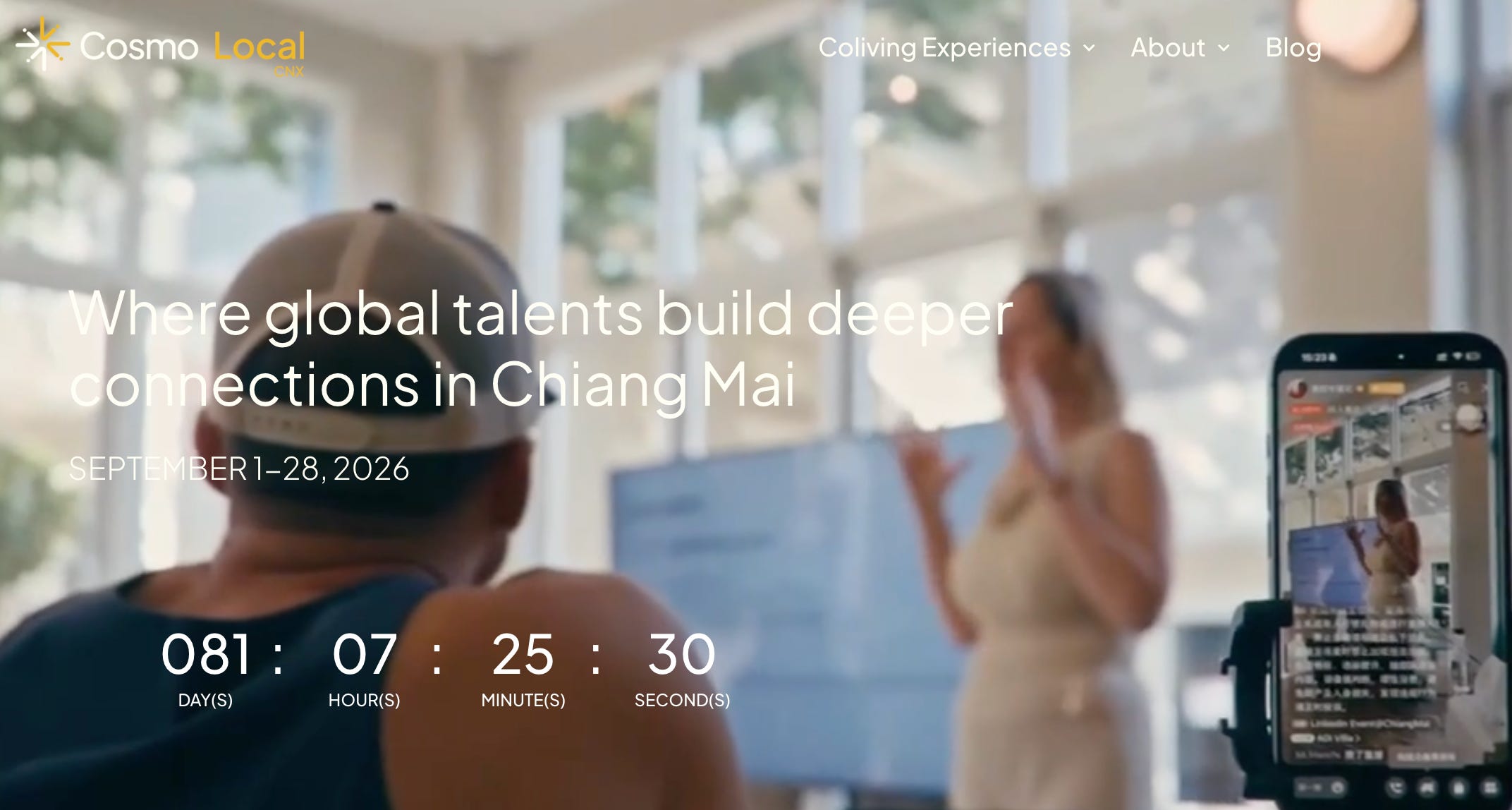
The clearest example of what intentional design looks like here is Cosmo Local CNX, launching this year. The premise: connect nomads and locals by design, not by accident. Shared projects, shared programming, shared economic activity between two communities that currently live side by side without much exchange. Fortunately Thailand Convention & Exhibition Bureau (TCEB) has come on board as a supporter. The institutional layer is starting to pay attention, even if slowly.
The Harder Push
Many players are looking at Chiang Mai right now. IASP, TCEB, cities across Asia watching Wat Ket district from the outside. This city looks like it’s figuring something out. On the ground, the disconnect between grassroots and institutions is still very real. The nomad community is doing the work, but the formal sector is largely pointed elsewhere.
That asymmetry won’t hold indefinitely. Either the formal sector starts treating the nomad community as a genuine economic actor, or the city cycles through another Forbes ranking with nothing durable to show for it. The pieces are here, but the bridge isn’t built yet.
One question before you go: is there a city doing this better — somewhere the grassroots scene and the formal sector have actually found each other? We’re mapping where these models are working. Reply with what you’re seeing, or reach out directly if you’re working on this in your own destination.