Gentrification Is a Housing Market Failure, Not a Foreign Income Problem
Miloš Pelucha · Thu Jul 16 2026
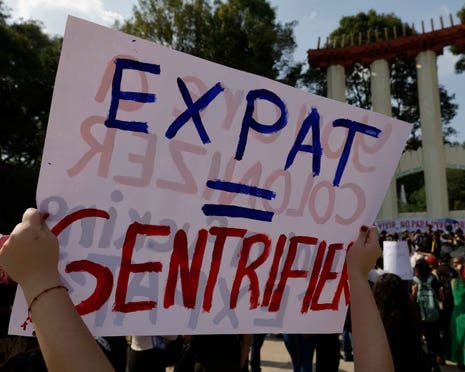
In April 2024, almost 60,000 people marched across the Canary Islands under the slogan "Canarias tiene un límite." This translates to “Canary Islands have their limits”
The Macaronesian archipelago of 2.2 million residents had received nearly 14 million foreign visitors the year before, while a third of its residents were at risk of poverty.
Two months later, Barcelona's mayor announced the city would eliminate all 10,000+ licensed tourist apartments by November 2028.
In the same twelve months, Tulsa, Oklahoma kept wiring $10,000 payments to remote workers willing to move there, and Córdoba, Argentina, kept building a program to convert its 300 monthly nomad arrivals into local companies.
Similar visitor profile, yet two very opposite policy responses.
I run a coliving space in the Azores and write about extended-stay economics. The people being protested in Tenerife are, demographically, my guests. So I’ve spent a lot of time on an uncomfortable question: is the anger justified, and if it is, what separates the places where globally mobile professionals became a problem from the places where they became an asset?
After looking at both sets of cases, I’ve come to read gentrification driven by mobile professionals as an infrastructure failure. Foreign income arrives in a city either way. What varies is whether that income gets connected to the local economy or left to pool in the housing market.
The cases below are why I read it that way.
Where the money pooled
One note before the cases. Gentrification is a wider phenomenon than rent. There are specific cultural losses that are real and deserve their own piece. This one follows the money through housing, because housing is where the economic transmission happens.
Start with the pattern in the cities now in open revolt.
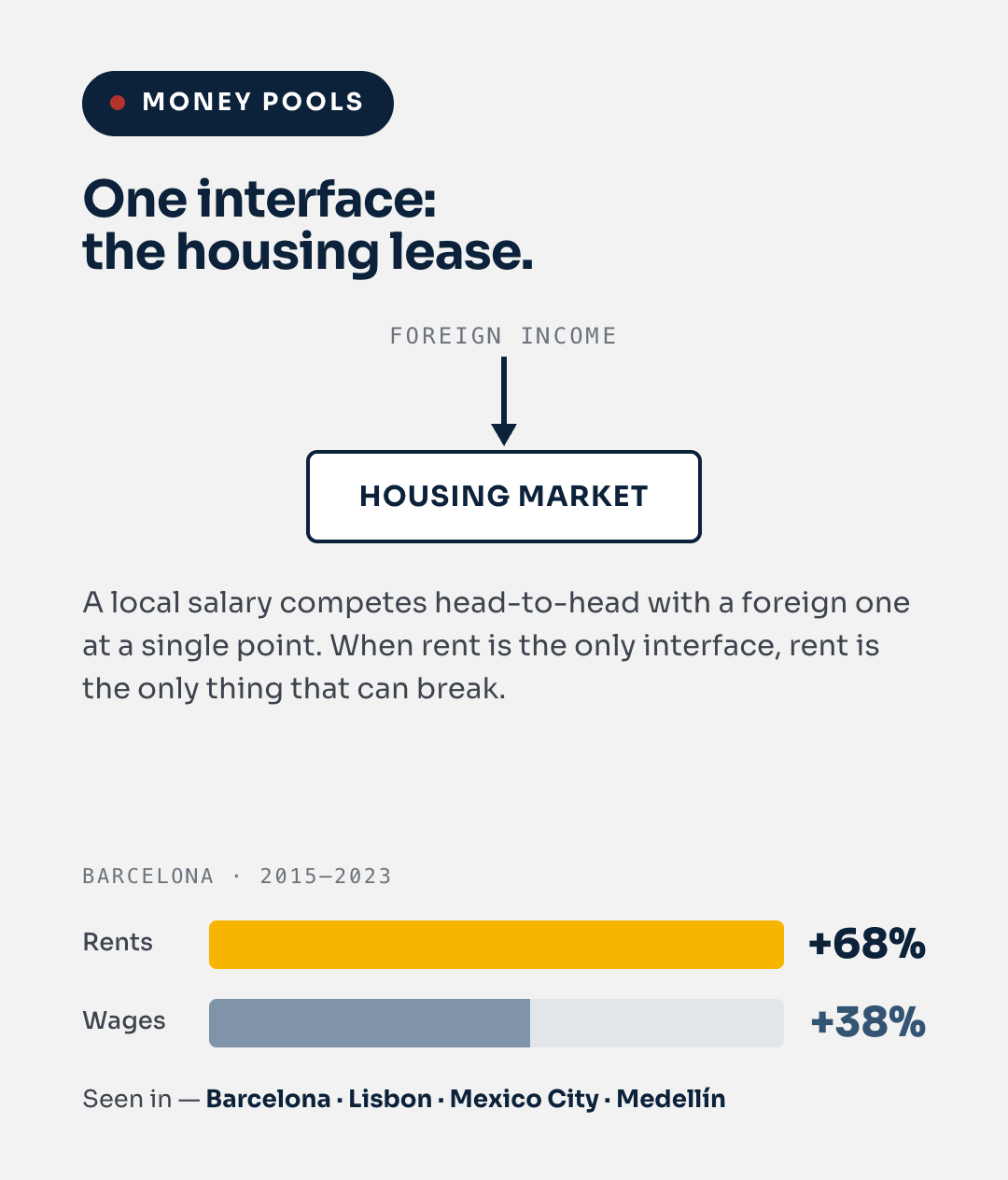
Barcelona’s rents rose close to 68% while salaries rose 38%. Mayor Jaume Collboni, announcing the license elimination, put it plainly: “We cannot permit that the majority of young people who wish to leave home also have to leave Barcelona.”
Lisbon shows the same mechanism at work within the housing market itself. Portugal ended its golden visa real estate route and reworked its tax regime for new residents under pressure from rising unaffordability.
Mexico City is another special case. In 2022, the city government signed an agreement with Airbnb and UNESCO to promote the capital as a global hub for digital nomads. Fast forward to 2026, and CDMX has announced a preliminary plan to regulate rental platforms.
We can find these cases all around the globe, with Medellín or Bali following suit. Often resulting in situations where local staff commute hours because they can’t live near their own jobs.
In each of these cases, the mobile professional’s income touches the local economy at exactly one point: housing lease.
Housing is the one market where a local on a local salary competes head-to-head with a foreign salary, so housing is where the entire pressure of the income gap concentrates. When the only interface between two economies is rent, rent is the only thing that can break.
The landlord captures the upside. Everyone else in the city gets a worse deal and no say.
Where the money is plugged in
Now, let’s have a look at the other set of cities.
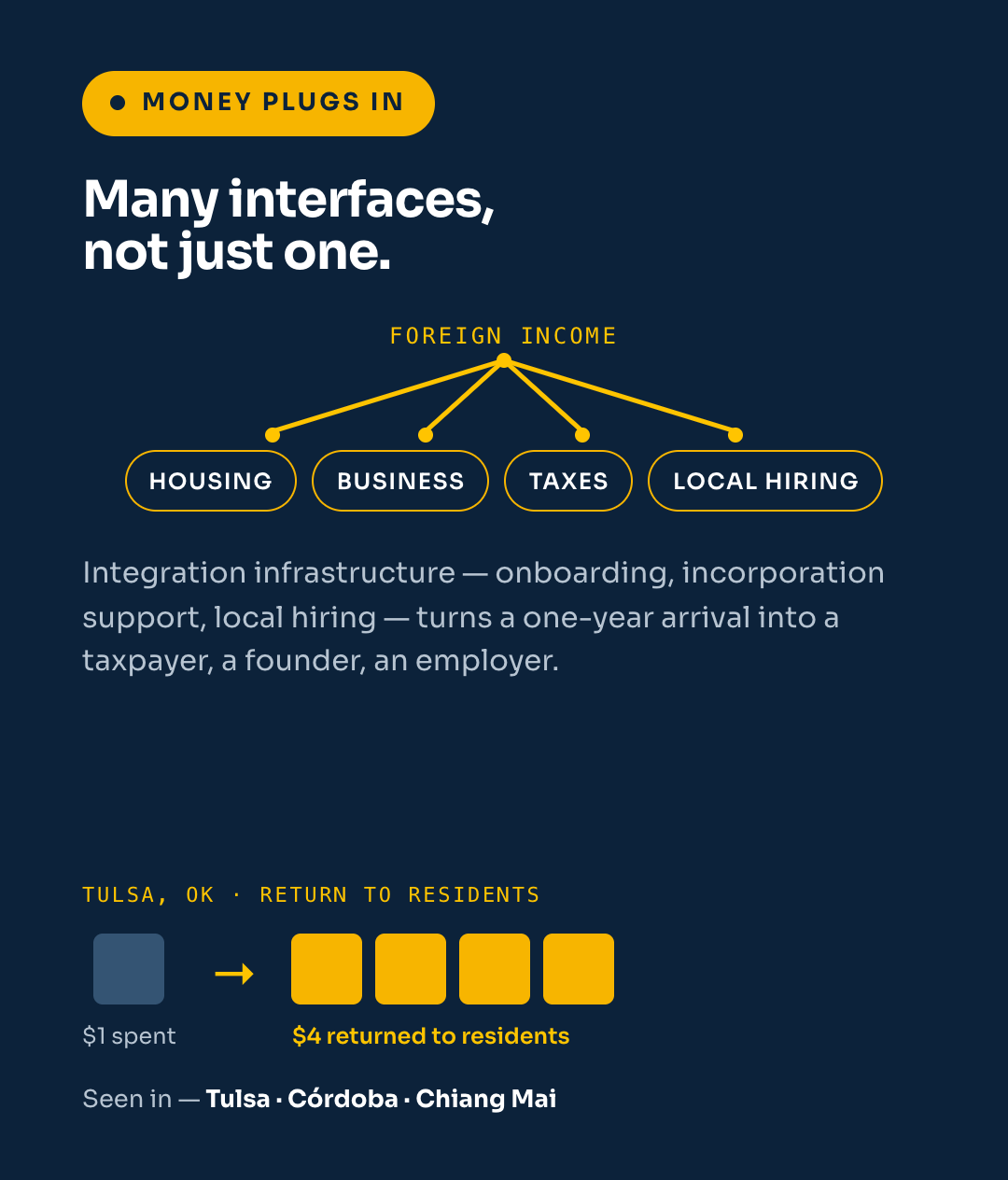
🇺🇸 Tulsa pays remote workers $10,000 to relocate. The real difference is what happens after arrival. The program runs deliberate integration infrastructure: community onboarding, local business connections, and pathways designed to turn a one-year remote worker into a permanent resident. The result, which I reported on after visiting, is a return of roughly $4 to residents for every dollar spent, flowing through local spending, tax base, and new business formation. Private funding makes execution of such a programme much easier, but frankly, Tulsa recruits the same person Barcelona is regulating away, and profits, because it built a functioning funnel.
🇦🇷 Córdoba, Argentina is running a slightly different program. The city’s nomad program spent two years attracting roughly foreign remote workers, then shifted its goal from attracting visitors to converting them: helping them incorporate businesses locally, join the city’s tech community, and hire Cordobeses. I covered this program in detail last month. The bet is that a transient remote worker is a company waiting to be landed, and the early returns suggest the mechanism works even if the volume is still small.
🇹🇭 Chiang Mai is testing a third model. My TES co-writer John Ho, who operates Alt_PingRiver there, is involved in the Nomad Friendly District initiative with the provincial government, which treats nomad infrastructure as an economic development project with local businesses inside it from the start, rather than a real estate opportunity that locals watch from outside.
Tulsa and Córdoba differ from Barcelona in housing supply, scale, and currency dynamics, and no policy analysis can fully isolate the integration variable. But the direction is consistent across three continents, and the mechanism is legible in each case.
3 steps any government can take now
None of this requires blaming the governments now imposing bans. Cities are responding rationally to real harm with the tools they have at their disposal.
My argument is that a second set of tools exists, and the cities using them are getting better outcomes.
1. Measure integration instead of arrivals for this set of visitor segments.
Arrivals and visitor spend tell you a building’s foot traffic. But these KPIs tells you whether the money is connecting locally:
business formation by foreign residents
arrivals to residency
tax registrations
length of stay
local hiring
I’ve made this argument before in the context of resident retention, and it applies doubly here.
2. Regulate by stay length, and separate the categories
A three-night Airbnb in a residential building and a three-month co-living resident create completely different pressure profiles, but most regulation treats them as one thing. Barcelona’s ban targets sub-31-day rentals, which is at least aimed at the right segment. Cities that create a distinct, protected medium-term category give operators like me a legal way to serve long-stay guests without competing for family housing stock.
Build conversion infrastructure.
Córdoba’s incorporation support and Tulsa’s onboarding cost little compared to what a landed company or a retained taxpayer returns. The mobile professional who opens a local entity starts paying into the system they were previously only pricing others out of. And where the underlying problem is a decade of underbuilding, as the OECD has noted for Lisbon, integration policy has to run alongside a housing supply response or neither works.
The takeaway
Canary Islands President Fernando Clavijo, facing his own protesters, said: “We can’t keep looking away. Otherwise, hotels will continue to open without any control.”
If the only interface between mobile professionals and your residents is the housing market, backlash is the predictable output, and a ban becomes your only remaining tool. Build the other interfaces early, measure them, and the same arrival that breaks Lisbon’s rental market becomes Tulsa’s taxpayer or Córdoba’s founder.
Gentrification pressure is a signal that money wants into your city. The cities winning right now are the ones deciding where it lands.
If you know of a destination team facing exactly this tension between visitor income and resident backlash, mention it in the comments - we’re always eager to learn more perspectives.