Build a Run Club That Doesn't Get You Deported
Miloš Pelucha · Thu Jul 30 2026
Last week, after the widely covered story about Network School's exit from Malaysia, other cases of tension between locals and expats began to emerge.
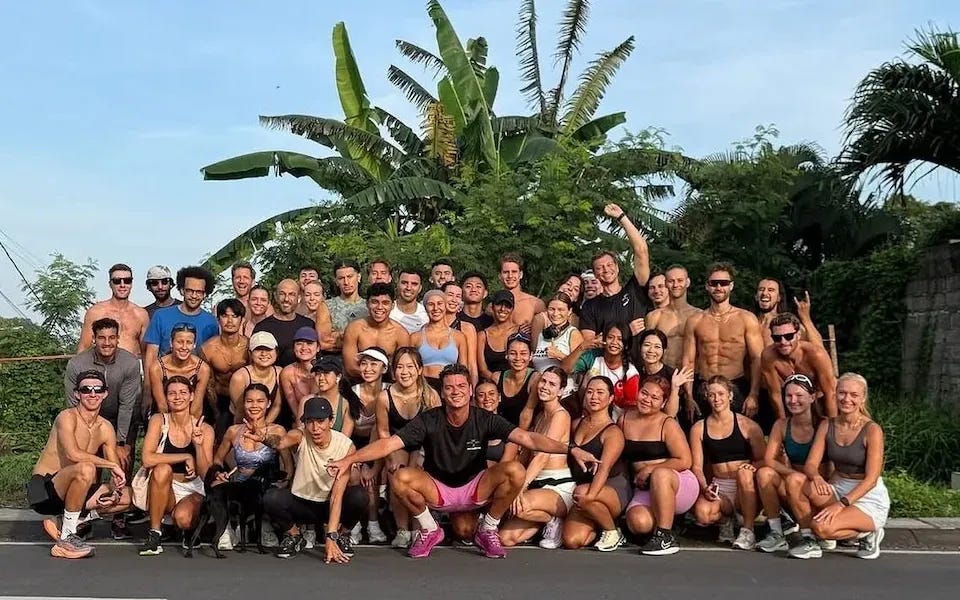
One of them is Entourage Bali, a run club in Bali. Screenshots of local people trying to get in and being rejected, while foreigners were gladly welcomed, appeared. One woman said her application was delayed because she had an Indonesian name and phone number, while her English-speaking husband was approved immediately.
Within days, the two Dutch founders of that club were placed on Indonesia’s immigration blacklist, deported, and banned from re-entering the country.
The club worked exactly as designed, and that was the problem.
Entourage Bali rose to prominence through their “silent disco” runs through Canggu, Uluwatu, and Ubud. Runners wore glowing headphones while an MC and a DJ played from the back of a moving truck. One of their recent event pulled around 150 people.
It was a real community product.
After their case became widely covered, the founders apologized on their Instagram and blamed a glitch in an automated approval system.
While it might have been a bug, this explanation pretty much stopped mattering the moment people could identify the pattern: foreigners using the local streets and the local sunrise, deciding who counted as part of the community.
Once again, in the same week, the state settled the question for the operators.
So, what is the common denominator here?
The tool cuts both way.s
A few weeks ago I argued that run clubs are the cheapest piece of community infrastructure a hospitality operator can build. That’s still true. A recurring weekly run produces belonging at almost no marginal cost.
This case in Bali shows us the other edge of that same blade. A run club builds a bubble by default. It gathers like-minded people who moved to a place for similar reasons, and that clustering is the entire point. It’s why people travel at all, and why concepts exist. Our own coliving, Lemon Bros in the Azores, was built around outdoor life and deep work precisely because we knew it would pull a particular kind of person.
With that being said. The “bubble” itself isn’t a failure or a mistake. Whether intentionally or not, people cluster. But whether the bubble has a door for local people or the people who already live at a place is a design decision, and some operators are reluctant to ever open this door.
Expats, Nomads, Foreigners… want to become locals, but no-one shows them how
Most operators assume the people inside the bubble want to keep to themselves.
Our data says the opposite. In 2024, we surveyed more than 60 digital nomads living in Barcelona. Out of them
86% said they wanted to learn about the city’s history and culture.
89% were open to learning Catalan to connect with locals.
72% already spoke Spanish.
And 23% actually took part in local community events.
More insights:
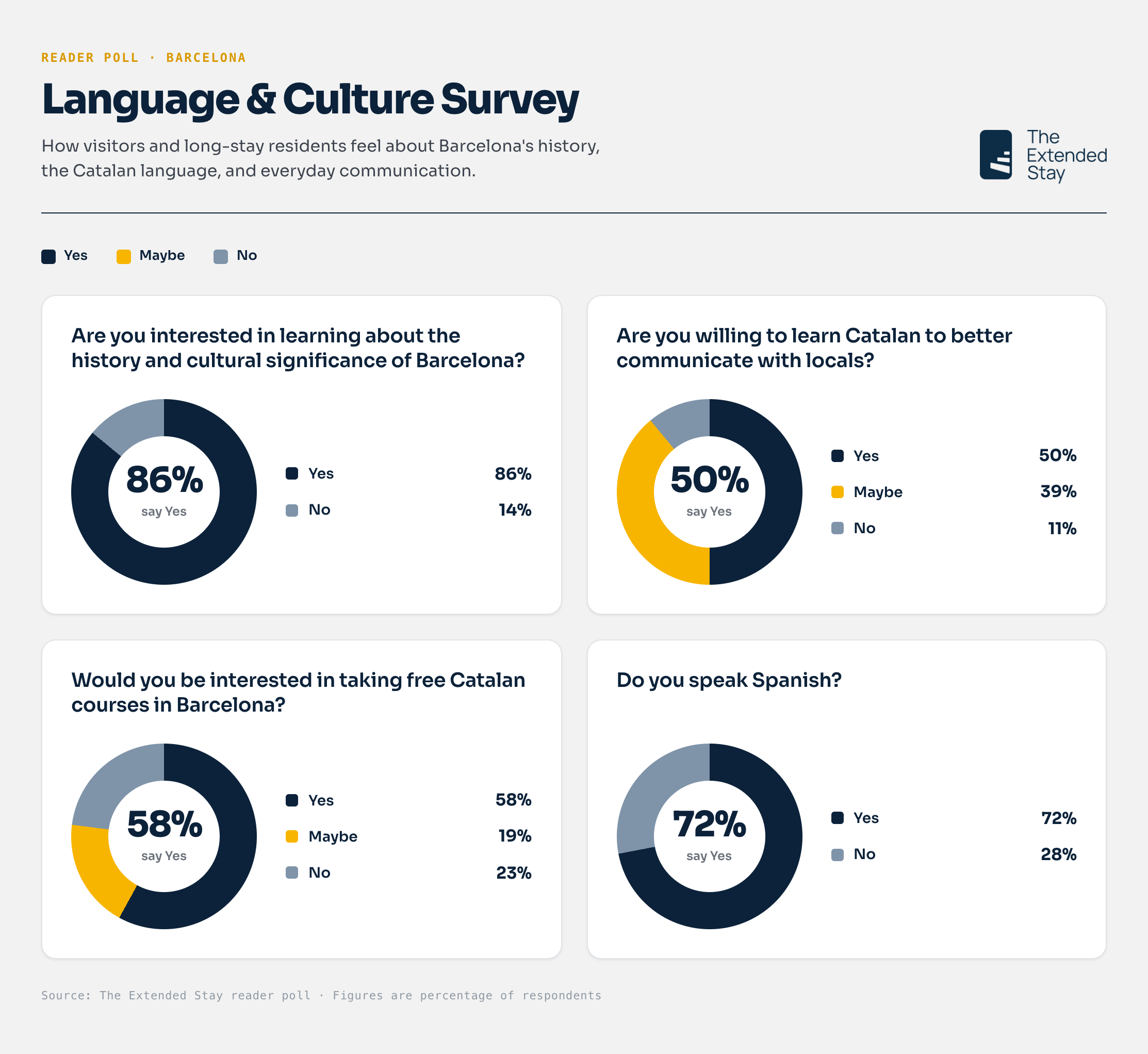
There’s a gap between desire and action. They want to integrate, but they’re not finding the right opportunities.
Gentrification by mobile professionals is an integration failure before it’s a moral one. People aren’t turning up with a goal of “stealing” someone’s place. They’re simply turning up to a place that invites them and offers them a good opportunity to build their lives.
Having a program that navigates newcomers in their new home is a severely overlooked and underrated benefit to your citizens' happiness. FindYourTulsa is an interesting program pioneered by ExperienceTulsa and Darcy Mayfield. It helps anyone who decides to choose Tulsa as their hometown navigate their first month and onboard them on life in Tulsa.
Onboarding or integration can have two angles. There’s integration with locals the economic and social kind, where a visitor becomes a regular at the corner shop and a face at the Sunday market.
And there’s institutional integration, where governments have standing and their say to shape what happens on their streets.
What a healthy community filters for
A run club is one small part of how a long-stay economy connects.
It sits in the community layer, next to events, language exchange, and local associations, and it works as wiring between the visitor and the resident.
The people building network states and pop-up cities describe their communities as nodes and networks. It’s a clean way to think about how places link up, and it’s how a lot of the nomad world now talks. But there is a group of builders within the community who take a different approach. The other part, which I personally also sign up to, views community as one part of the ecosystem.
That reframes what actually went wrong in Bali. Entourage filtered on the wrong variable. It read local names, local numbers, and screened them out. That places the bubble not within - but outside of the ecosystem.
There’s a split running through the nomad world right now, between people who arrive intending to become part of a place and people who arrive intending to skim it.
Intent, a well-known piece of the travel industry, filter. A local who wants in and a nomad who wants in belong on the same side of the ecosystem. A visitor who wants a walled resort with faster wifi belongs on the other, whatever their passport says.
Juan Barbed, who founded the rural coliving rooral in Spain, put it in a way that stuck with me last year at Bansko Nomad Fest. Ask yourself, do you build bubbles, or do you break bubbles?
So, how to build a community product that serves nomads but doesn’t hurt locals?
Building a community product with a door in it comes down to a few choices. Start with access. If your run, your event, or your channel has an application step, know exactly what it screens for, and make sure that’s intent and not origin. Keep it free for locals, because a resident who has to pay to join the community happening on their own street won’t come.
Then partner instead of importing. The strongest version of a run club in a new place is a co-run with a group that already exists there. Where you can, make it resident-led. There are multiple success stories in the industry where local hires built the programming, which is why the community reflected the place instead of performing it.
The same wiring that backfired in Bali is what builds a place when it runs the other way.
When residents and the people passing through share the run and the same shot at building a life around the place, community holds together.
That shared ground is how forward-thinking places get made.
An operator can open the door, but no operator holds it open alone. It holds when locals and newcomers stand in the place as equals and build the rest together rather than against each other.
Miloš